i luv cinema

  • Facebook
  • Pinterest
  • Tumblr
  • Twitter
  • YouTube
  • Home
  • 100 “Must-See”
  • About Me
Home Archives for film noir

November 11, 2014 By iluvcinema 3 Comments

NOIRvember Feature: Leave Her To Heaven (1945)

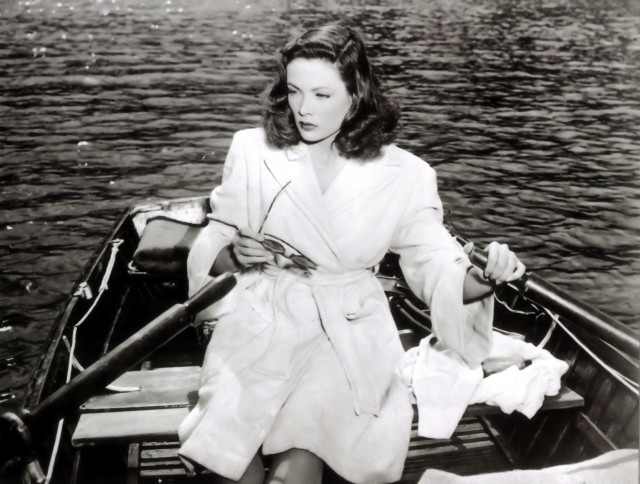
I guess it is something that for my first feature (Leave Her to Heaven) during NOIRvember I choose a vibrant Technicolor film, which in my estimation at least is loosely noir, and borders more on the melodramatic. I  fact I often wonder if this film were shot in black and white, would I be so reluctant to fully class it as a noir.
Annex - Tierney, Gene (Leave Her to Heaven)_03

Sure, over the years cinephiles and scholars alike have played fast and loose with what actually classifies a film as a noir. I think after reading endless materials on the subject, I will fall back on this excerpt from AMC’s Filmsite analysis of Film Noir (written by Tim Dirks):

Classic film noir developed during and after World War II, taking advantage of the post-war ambience of anxiety, pessimism, and suspicion. It was a style of black and white American films that first evolved in the 1940s, became prominent in the post-war era, and lasted in a classic “Golden Age” period until about 1960 […]

Important Note: Strictly speaking, film noir is not a genre, but rather the mood, style, point-of-view, or tone of a film. It is also helpful to realize that ‘film noir’ usually refers to a distinct historical period of film history – the decade of film-making after World War II, similar to the German Expressionism or the French New Wave periods. However, it was labeled as such only after the classic period – early noir film-makers didn’t even use the film designation (as they would the labels “western” or “musical”), and were not conscious that their films would be labeled noirs.

Very often, a film noir story was developed around a cynical, hard-hearted, disillusioned male character … who encountered a beautiful but promiscuous, amoral, double-dealing and seductive femme fatale … She would use her feminine wiles and come-hither sexuality to manipulate him into becoming the fall guy – often following a murder. After a betrayal or double-cross, she was frequently destroyed as well, often at the cost of the hero’s life. As women during the war period were given new-found independence and better job-earning power in the homeland during the war, they would suffer — on the screen — in these films of the 40s. Source: filmsite.org

Well I guess in this regard (and noting the sections I have bolded) Leave Her to Heaven may not pass the sniff test for the following reasons:

  1. Like I said at the open, the film is in live and living Technicolor.
  2. Our principal male protagonist is NOT a hard-hearted, disillusioned figure. In fact, Cornel Wilde embodies the romantic, heroic optimism that cowers in the light of Gene Tierney‘s wicked ways.
  3. Sure the female fataleis destroyed but (spoiler alert) she does so by her own hands and for a rather outlandish reason.
    • And although not mentioned above, at times, in a “film noir,” there is a female foil to the femme fatale, the “good girl,” who is ever so deserving of our male lead’s love and affection. CHECK! Another Jeanne (Crain) fits that role to a tee.
  4. The hammy over the top theatrics of courtroom scenes need to be seen to be believed.

Also note, there is peril and menace lurking around every corner because of Tierney’s cold calculations and manipulations..

So what do you think  yup or nope – is Leave Her to Heaven a “real” film noir? Hit the comments section below with your thoughts.

Key Film Facts:

Directed By: John M. Stahl
Written By: Jo Swerling (based on novel by Ben Ames Williams)

Principal Cast

  • Gene Tierney (Ellen Berent Harlan)
  • Cornel Wilde (Richard Harland)Vincent Price (Russell Quinton)
  • Jeanne Crain (Ruth Berent)
  • Mary Phillips (Mrs. Berent)
  • Gene Lockhart (Dr. Saunders)
  • Darryl Hickman (Danny Harland)

Filed Under: Fun Stuff Tagged With: film noir, film noir noirvember, noirvember

December 27, 2011 By iluvcinema 6 Comments

Tuesday’s Overlooked Film: Woman in the Window (1944)

Hope everyone had a restful and enjoyable holiday weekend. Well I am back with my latest edition of the weekly series, Tuesday’s Overlooked Film. Again, special thanks to Todd Mason of Sweet Freedom for collecting all the contributions.

This week, I thought I had a film all lined up, but then I read a post by frequent commenter to this site, ‘Jack Deth,’ on the website, Front Room Cinema. His post was about the Top Ten Femme Fatales. As one may have guessed, many of them came from the film movement/genre known as film noir. That immediately put me in a noir-ish mood, having also just recently sat through TCM’s ‘Noir Christmas.’

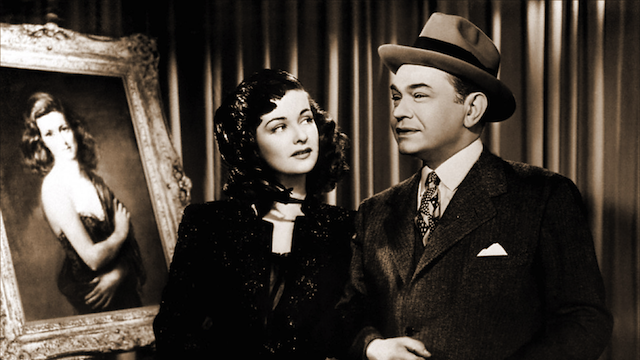
This inspiration lead me to the 1944 feature, The Woman in the Window, directed by Fritz Lang. It starred Edward G. Robinson, Joan Bennett and Dan Duryea. It is based on J. H. Wallis’ novel Once Off Guard.

At the beginning of the film, our protagonist, the milquetoast Professor Wanley (Robinson) is headed towards his gentlemen’s club while his family is away. He passes a shop window and sees an oil painting of the lovely Alice Reed (Bennett). After a night in the club, Wanley departs only to run into the subject of the painting in the flesh. This chance encounter leads Wanley and the audience on an unexpected journey that comes to a shocking conclusion.

At the time of its release, The Woman in the Window was a minor critical and commercial success. But as with many things, over time, this film became forgotten by the masses – with the exception of the most ardent of noir fans.

This principle cast and director would collaborate again in 1945’s Scarlet Street.

Filed Under: Overlooked Films Tagged With: edward g. robinson, film noir, fritz lang, joan bennett, woman in the window

November 2, 2011 By iluvcinema 4 Comments

Just Had to Share …

I will make this short and sweet; please view this commentary of one of my all-time favorite film noirs, Detour (1945) presented by A.O. Scott of The New York Times:

My father recommended this film to me several years ago, just as I was cutting my teeth in the genre. As with any B-movie, the production values (or lack thereof) may deter some people who are not used to the genre’s conventions. But in my mind’s eye that makes it even more of an exciting cinematic venture.

Note that this film is in the public domain and can easily be found online.

Let me know what you think.

Filed Under: Recommendation Tagged With: a.o. scott, b-movie. low budget, detour, film noir, new york times

  • « Previous Page
  • 1
  • 2
  • 3
  • 4
  • Next Page »

Search

Recommended Read

Captain of Her Own Soul

UC Press

Added to My Video Library

Imitation of Life (1934)

Centers of Film Study

  • JBFC
  • MoMA Film Screenings
  • The Picture House
  • University of California Press (Cinema and Media Texts)

Fast Film Resources

  • Alfred Hitchcock Wiki
  • Alfred Hitchcock-Master of Suspense
  • Film | The Guardian
  • Kermode & Mayo's Film Reviews
  • Park Circus
  • Rotten Tomatoes
  • The Internet Movie Database
  • Tribeca Film

Film Societies

  • BAMcinématek
  • Film Society of Lincoln Center

This is How We Blogroll

  • BBC Film: The Bulletin
  • Cinematic Corner
  • Comet Over Hollywood
  • Critical Women on Film
  • FlixChatter
  • Future of Flim (Tribeca Film Blog)
  • in so many words …
  • Kermode's Film Blog
  • Paula's Cinema Club
  • Roger Ebert
  • Sobriety Test Movie Reviews
  • Superhero Movie Talk
  • Sweet Freedom

Archives

Tweets by @iluvcinema
  • Terms of Use
  • Privacy Policy
  • Contact iluvcinema
totalfilm600movieblogs

[footer_backtotop]

Copyright © 2025, iluvcinema ·Streamline Pro Theme · Genesis Framework by StudioPress · WordPress · Log in